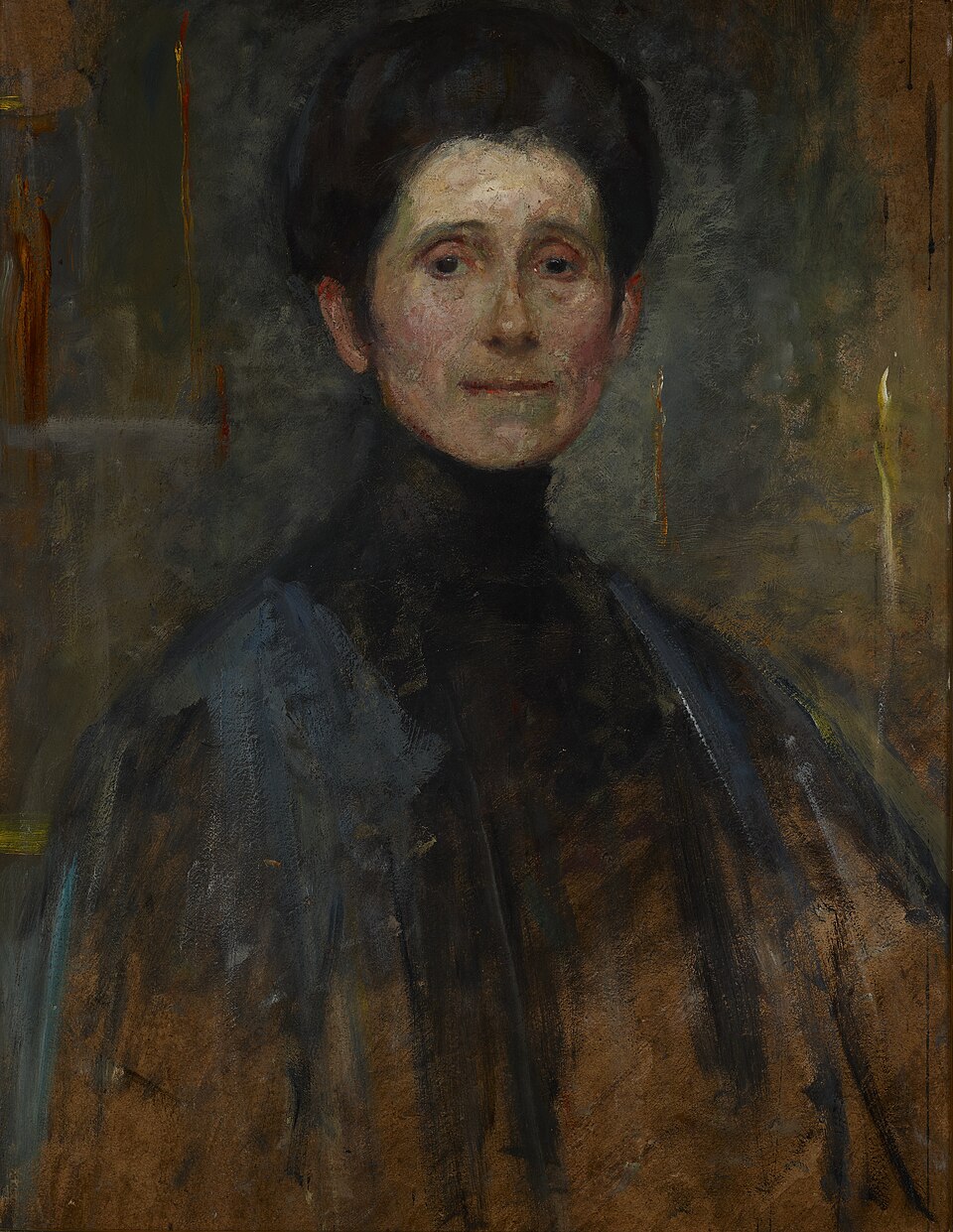
Olga Boznańska (1865–1940) was Poland’s most celebrated female artist, renowned for her haunting psychological portraits with dark backgrounds and luminous faces. Living in Paris, she became a symbol of Polish artistic genius in Europe.
French Mother, Polish Father from Kraków
Born April 15, 1865, in Kraków to Polish engineer Adam Nowina Boznański and Frenchwoman Eugenia de Mondain from Valence. Her mother, an amateur artist and governess, gave her first drawing lessons.
Conquered Paris Without Formal Academy Training
Arriving in Paris 1896, Boznańska bypassed École des Beaux-Arts (closed to women) through private study. Her 1898 Salon triumph made her first Polish woman celebrated in French art circles.
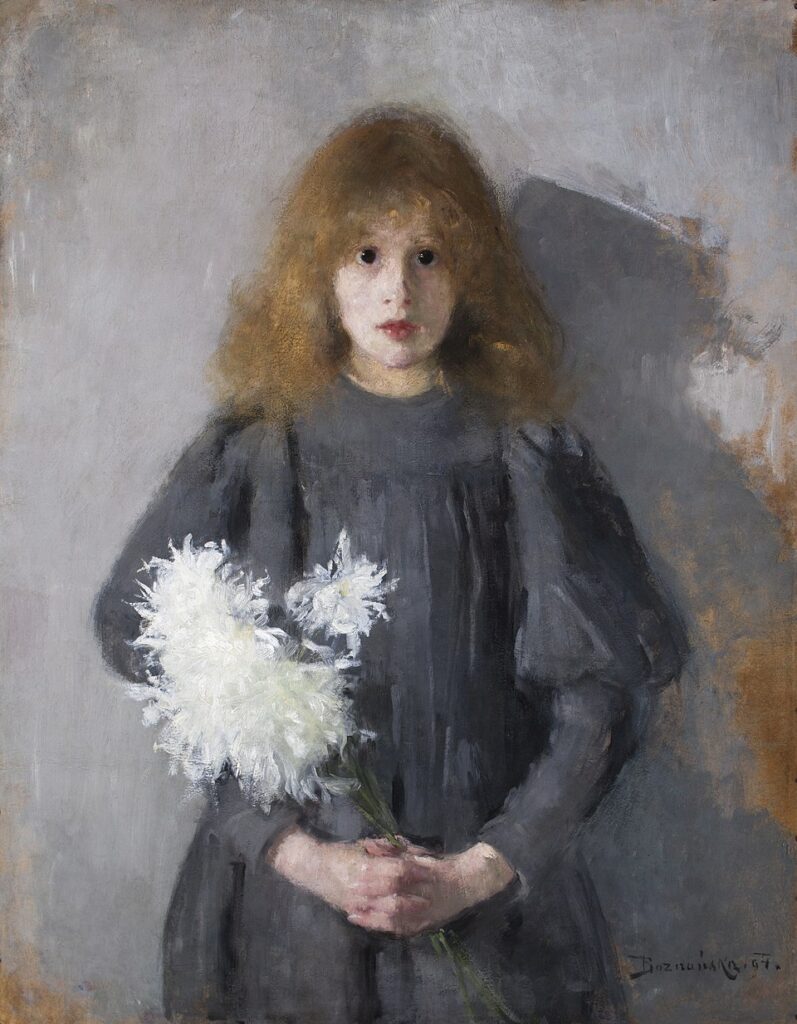
Haunting "Girl with Chrysanthemums" Masterpiece
Iconic Girl with Chrysanthemums (1894) features pale girl against grey void, flowers dramatically lit. Psychological intensity and velvety brushwork stunned Paris – Poland’s answer to Whistler.
Invented Signature Black Backgrounds
Boznańska revolutionized portraiture with pitch-black backgrounds making faces glow ethereally. Critics called it “Polish melancholy made visible,” blending Impressionist light with Symbolist mood.
Rejected Marriage for Artistic Freedom
Never married, Boznańska lived independently in Montmartre. Declared: “Marriage kills art,” prioritizing studio over domesticity in male-dominated Paris.
Painted European Royalty and Celebrities
Clients included Polish intellectuals, French aristocrats. Portrait of pianist Aleksander Michałowski captures genius through piercing eyes—psychological portraiture mastery.
Velvet Studio Recluse with Pets
Famous velvet-draped studio at 1 Rue de Villejust: cats everywhere, canvases piled high, visitors waiting hours. Worked only by natural light into her 70s.
First Woman Gold Medal at Munich Secession
1900 Munich Secession gold medal—Europe’s top modern art exhibition. Beat male rivals, proving Polish women dominated international avant-garde.
Mentored Young Poland Movement
Taught privately, influencing interwar Polish modernism. Students included Witkacy and Young Poland artists, spreading her dark, introspective style.
Died in Nazi-Occupied Warsaw
Returned to German-occupied Warsaw 1939, died October 26, 1940. Buried Powązki Cemetery; studio looted, but legend survived as Polish cultural resistance symbol.
Invented psychological Impressionism—portraits capturing soul through shadow. Parisian success proved Polish genius during partitions. Poland’s greatest female artist.