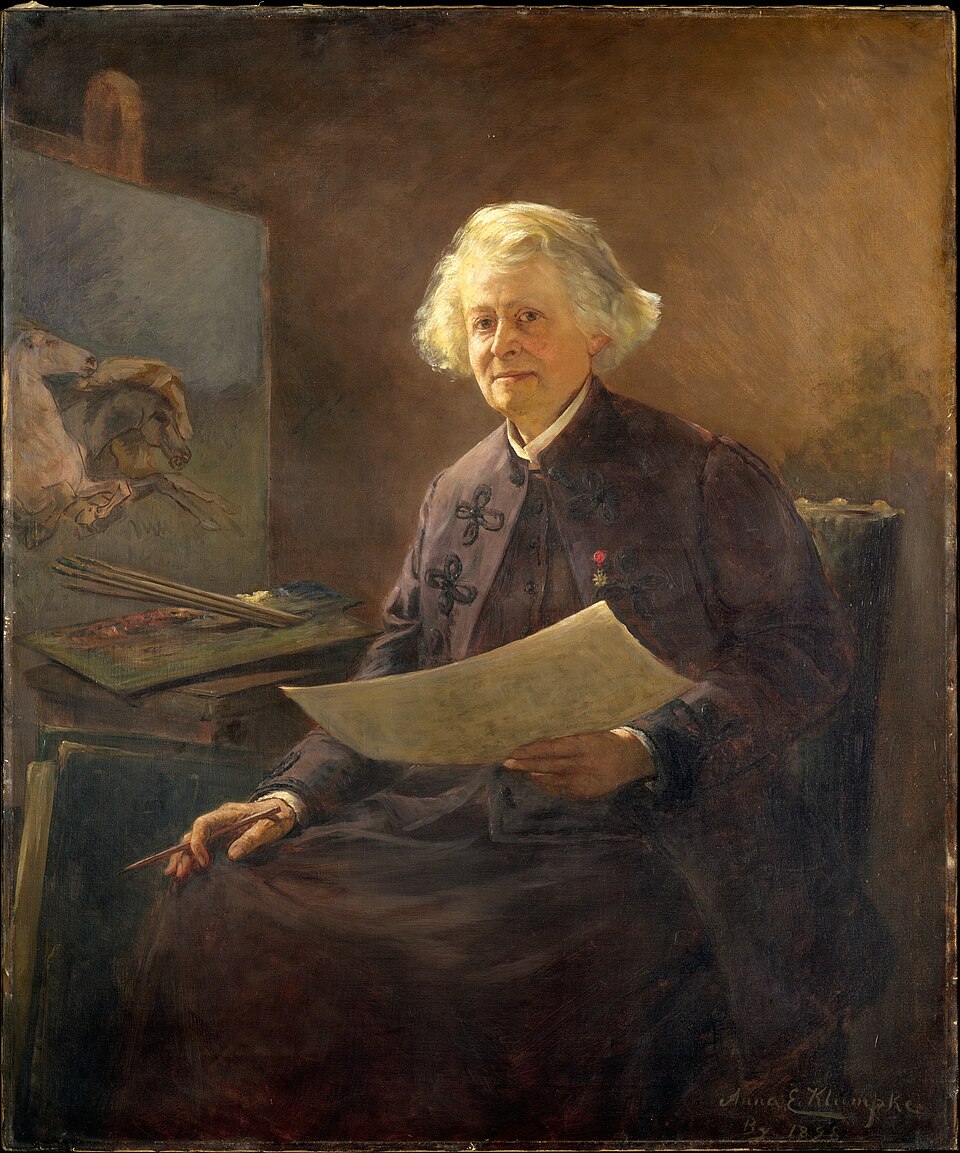
Rosa Bonheur (1822–1899) was the most celebrated female animal painter of the 19th century, famous for monumental horse scenes blending scientific precision with radical independence. She broke gender barriers by securing police permits for trousers, amassing greater wealth than male rivals, and living openly with female partners while dominating Europe’s art world
Daughter of an Artist Family
Born March 16, 1822, in Bordeaux to painter Raymond Bonheur and his artist wife Sophie, Rosa showed prodigious talent from childhood. Her father trained her rigorously from age 12, bypassing formal academies that barred women, while her mother’s death instilled early independence.
Police Permit for Trousers
To paint animals at Paris horse markets, Bonheur obtained a police permit to wear men’s clothing (trousers, shirts, even cropped-short hair). In 1850s France, women needed authorization for “indecent” male attire—she renewed it annually for practical fieldwork.
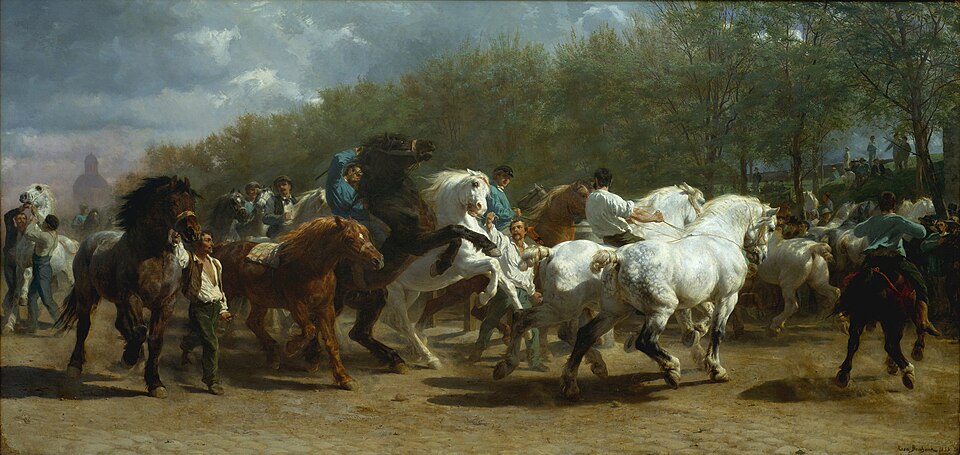
The Horse Fair: Her Blockbuster Masterpiece
The Horse Fair (1853–55) depicts massive draft horses with photographic realism, making her world-famous. Queen Victoria bought an engraving; the painting toured America, earning $30,000 (millions today). Critics called it “the Sistine Chapel of horse painting.”
Anatomical Precision Studies
Bonheur spent years studying animal skeletons at museums, dissecting carcasses, and living on farms. She kept a menagerie of lions, deer, and sheep at her Château de By, sketching from life for anatomical precision unmatched by male rivals.
Wealthier Than Male Contemporaries
By age 40, Bonheur earned more than Delacroix or Courbet, living in a custom-built castle. She was the first woman awarded France’s Legion of Honor (1865) by Empress Eugénie, wearing trousers to the ceremony.
Openly Lesbian Partnership with Nathalie Micas
Bonheur lived 40+ years with childhood friend Nathalie Micas (died 1889) in a committed partnership, sharing the Château de By. After Nathalie’s death, she lived with American painter Anna Klumpke until her own death.
Smoked Cigars and Hunted with Men
Bonheur shocked society by smoking cigars, hunting with rifles, and socializing with male artists as equals. She declared: “The only great men I’ve known were women,” rejecting marriage entirely.
Rejected Romanticism for Scientific Realism
Unlike dramatic animal paintings of the era, Bonheur’s work emphasized scientific accuracy – muscle structure, coat texture, movement studies. Ploughing in the Nivernais (1849) won Salon gold medal for its documentary precision.
International Celebrity and Royal Patronage
Bonheur’s fame crossed borders: Lincoln hosted her work in the White House; Queen Victoria commissioned portraits; Buffalo Bill Cody brought his Wild West Show to her castle. She was Europe’s first celebrity female artist.
Mentored Anna Klumpke and Secured Her Legacy
In 1898, bedridden Bonheur dictated her memoirs to pupil Anna Klumpke, whom she later adopted. Klumpke preserved 2,000+ works and published Reminiscences of Rosa Bonheur (1908), ensuring her mentor’s place in history.
Dismissed as “just an animal painter,” Bonheur pioneered scientific realism and female independence. Her cross-dressing, wealth, and unapologetic queerness made her a 19th-century feminist icon. Today she symbolizes breaking every gender convention while mastering technical brilliance.