Berthe Morisot
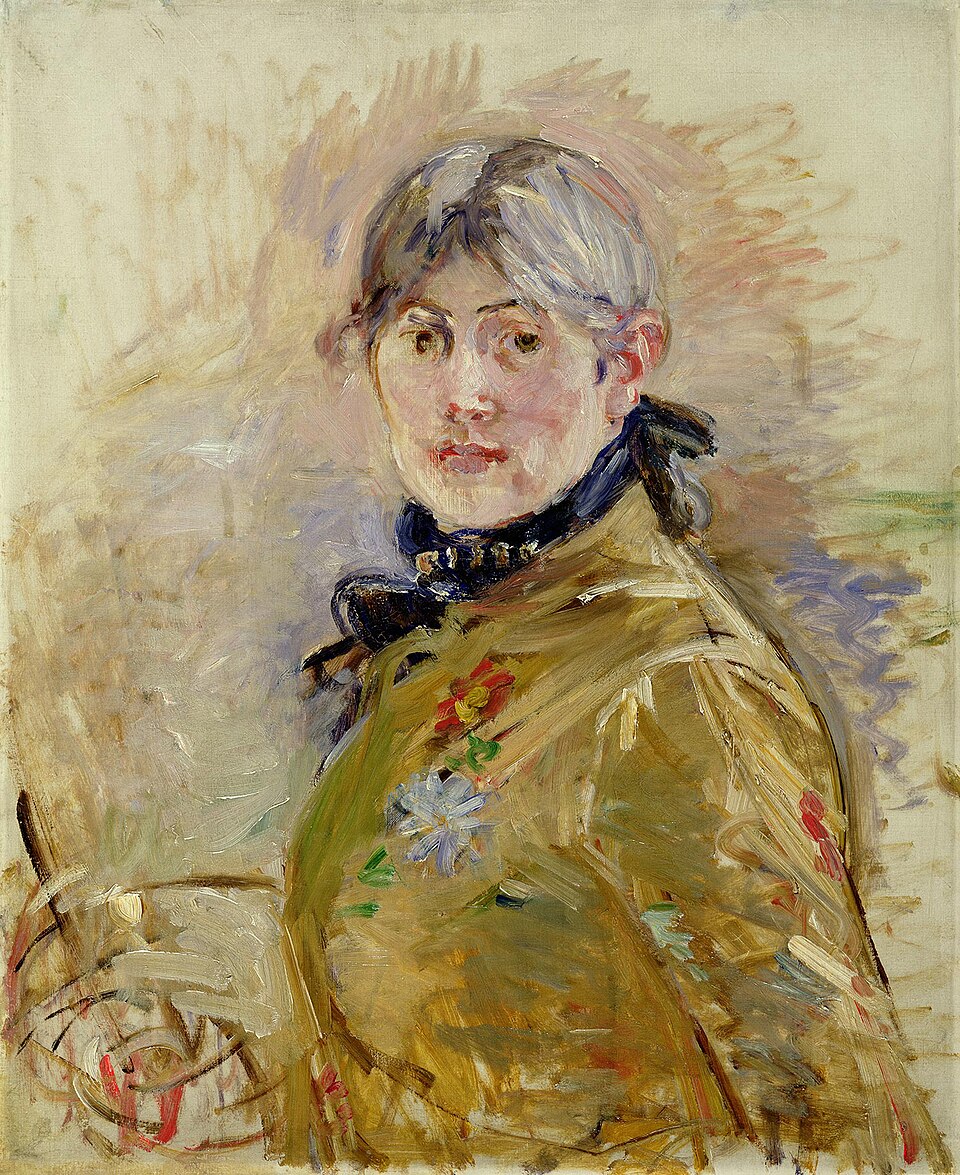
Berthe Morisot (1841–1895) was Impressionism’s most accomplished female artist, painting intimate domestic scenes with revolutionary light effects and loose brushwork. Sister-in-law to Édouard Manet, she exhibited with Monet, Renoir, and Degas from the movement’s inception.
Aristocratic Beginnings and Early Talent
Born January 14, 1841, into a bourgeois family in Bourges, France, Morisot received formal training rare for women. By age 20, her landscapes impressed Camille Corot, who became her mentor and declared her “the best pupil I have ever had.”
First Woman in the Salon des Refusés
In 1864, Morisot became one of the first women accepted into the revolutionary Salon des Refusés, exhibiting alongside Manet and Whistler. Her Two Seated Girls stunned critics with its fresh approach to portraiture.
Married Édouard Manet's Brother
In 1874, she married Eugène Manet, Édouard’s younger brother, creating a powerful artistic alliance. The families shared studios, models, and ideas – Berthe influenced Manet’s lighter palette while maintaining her distinct style.
Exhibited in All 8 Impressionist Shows
Unlike male Impressionists who sometimes skipped exhibitions, Morisot participated in every single Impressionist exhibition (1874–1886). She was the only artist with perfect attendance, proving unwavering commitment.
Pioneered "Women Painting Women"
Morisot revolutionized subject matter by specializing in female domestic scenes – mothers, children, gardens – painted en plein air with unprecedented spontaneity. Critics called her “the painter of modern motherhood.”
The Cradle: Her Masterpiece of Motherhood
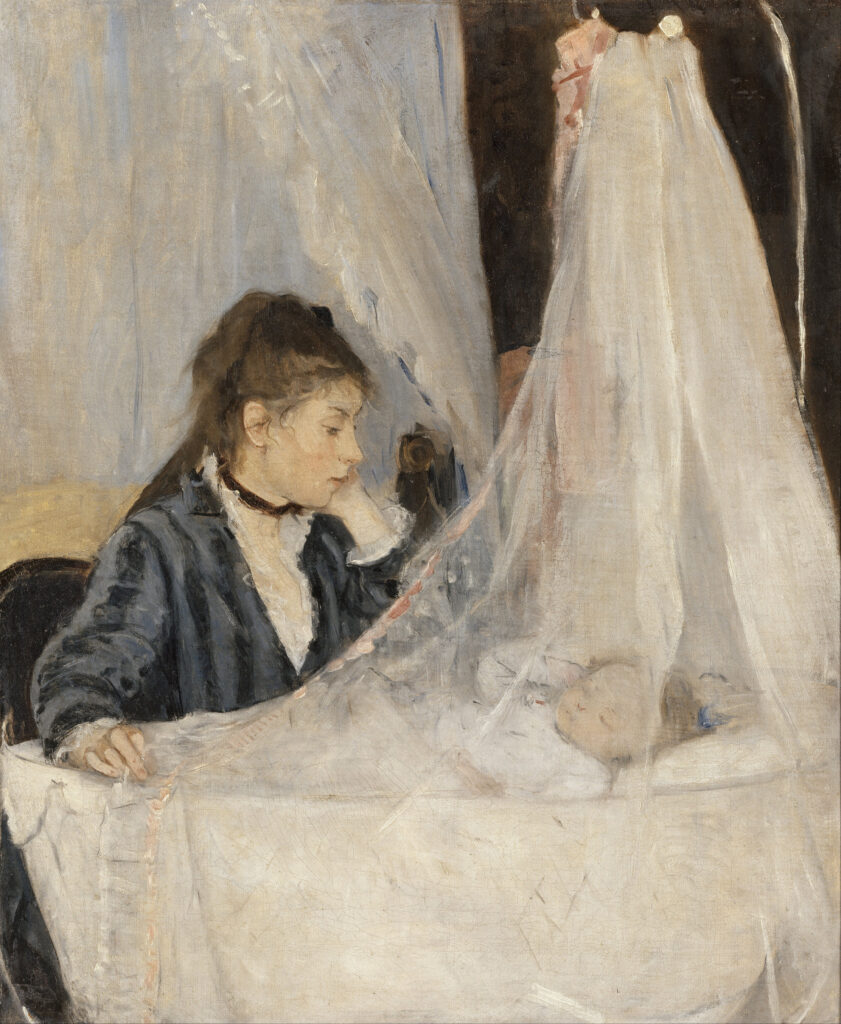
The Cradle (1872) captures her sister Edma tenderly rocking a baby with vibrating brushstrokes and luminous whites. Édouard Manet praised it as “perfection itself,” even copying it for his own version.
Defied Victorian Gender Restrictions
While other women artists avoided outdoor painting, Morisot fearlessly painted en plein air in public parks and gardens, scandalizing 19th-century sensibilities. She carried easels through Paris streets with her daughter Julie.
Financial Independence Through Art
Unlike most female artists dependent on family, Morisot supported herself entirely through painting sales. Her works commanded high prices during her lifetime, achieving financial autonomy rare for women.
Mentored by and Influenced Manet
Though often portrayed as Manet’s “pupil,” Morisot actually taught him Impressionist techniques. Her loose brushwork and color theories transformed his late style from dark realism to luminous Impressionism.
Tragic Early Death at Height of Fame
Morisot died April 2, 1895, at age 54 from pneumonia, leaving 400+ paintings. Her final works show intensified color and emotional depth. Renoir called her death “the greatest loss Impressionism ever suffered.”
Misunderstood as “just a domestic painter,” Morisot actually invented modern female portraiture. Her technical innovations—vibrant whites, broken color, emotional immediacy—directly influenced post-Impressionists. Today she’s celebrated as Impressionism’s true female genius, proving women could master revolutionary techniques while living traditional lives.